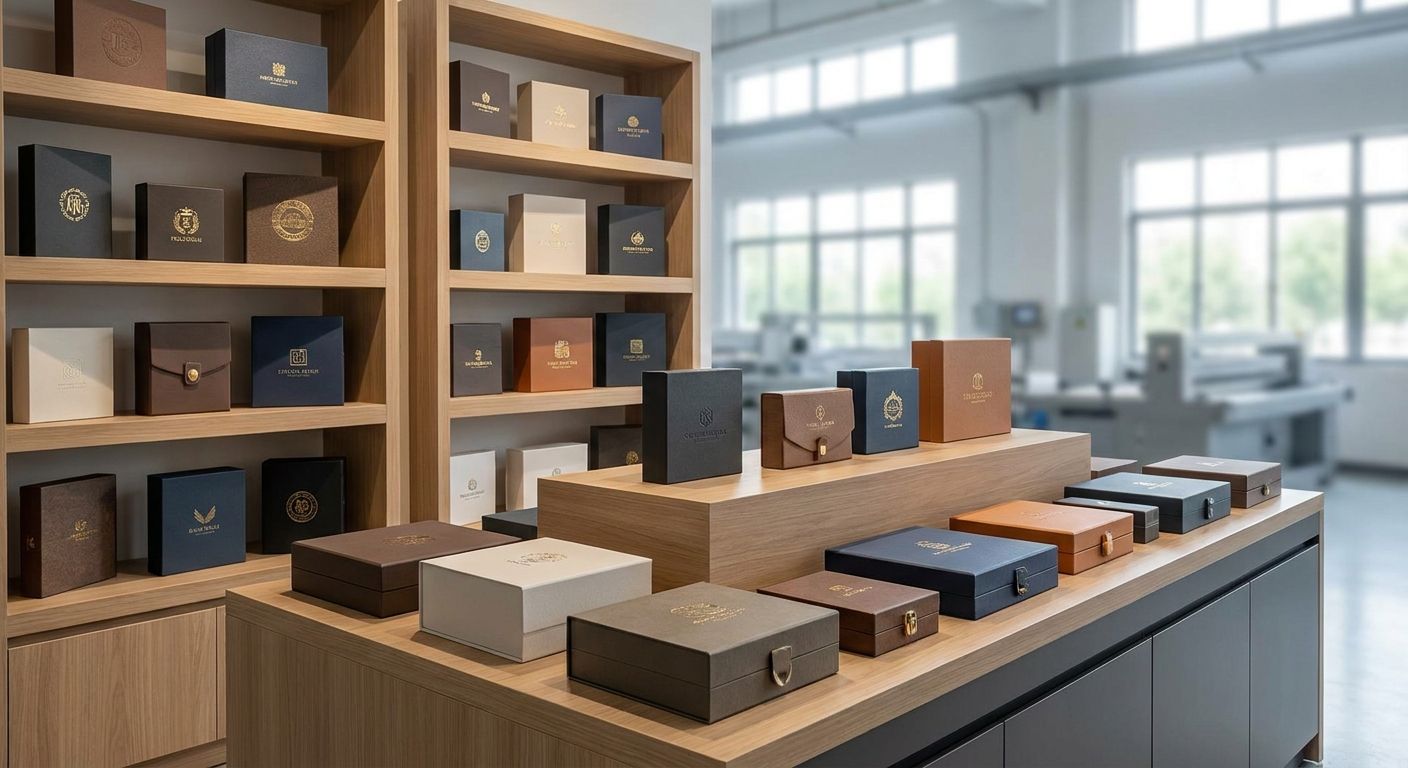
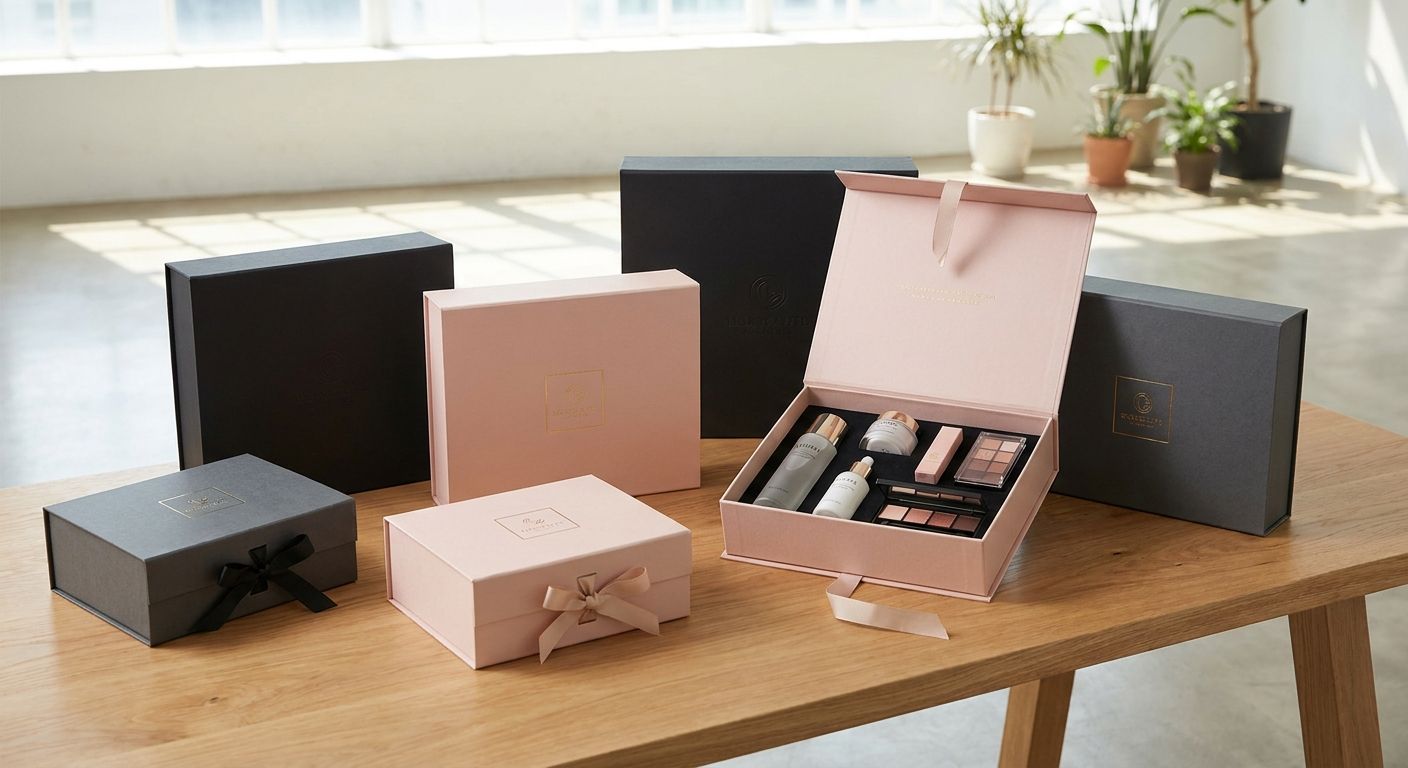
Custom rigid gift boxes for cosmetics brands are foldless, structural packaging built on a chipboard or greyboard core with the aim of matching the shelf price and unboxing expectations of prestige skincare, makeup, and fragrance lines. Cosmetics buyers have different needs than a wine label or a pharma carton: the box has to survive drop-shipping to a customer's door, hold a glass bottle or compact without rattling, and photograph well for the unboxing videos that now drive a meaningful share of beauty sales in 2026.
- Custom rigid boxes for cosmetics run on 1.5mm-3mm chipboard cores wrapped in 128-300gsm paper for structural rigidity.
- Magnetic closure and drawer-style rigid boxes suit high-SKU-count cosmetics lines; hinged-lid boxes suit single-hero-product launches.
- Sample and test the box with the actual filled product before committing to a full production run in 2026.
- Yuan Packaging produces custom rigid gift boxes for cosmetics brands alongside labels and cartons, so packaging formats can be matched across a single product line.
- Packaging cost creep is the most common cosmetics-brand mistake — tier your box spec to your SKU price point, not to your flagship product.
Why custom rigid boxes matter for cosmetics brands in 2026
A folding carton flexes, dents at the corners, and reads as mass-market the moment a customer picks it up. A rigid box does not flex. That structural difference is why prestige skincare, makeup palettes, and fragrance sets almost never ship in folding cartons once the retail price crosses a certain threshold — the box has to signal the price before the lid even comes off.
Cosmetics packaging also carries more physical risk than most categories: glass bottles, pumps, and pans need snug internal fit, not just an attractive exterior. A rigid box built with the wrong internal cavity tolerance either lets the product shift in transit or forces the customer to fight the packaging to get it open — both undermine the unboxing moment cosmetics brands are paying for.
Build your rigid box the right way: step by step
Define your box construction and structure
Start with the closure and opening mechanism before touching finishes or color. This decision drives cost, manufacturing complexity, and how the box performs on a shelf versus in a mailer.
- Hinged-lid boxes for single hero products or gift sets that need a dramatic reveal
- Magnetic closure boxes for reusable packaging customers are meant to keep
- Drawer/slide boxes for multi-item palettes and sample kits
- Two-piece telescoping boxes for the lowest-cost rigid option with a premium feel
- Book-style boxes for fragrance and skincare sets that pair a booklet insert with the product
Choose your board thickness and lamination
Rigid box performance comes from the core board, not the printed wrap. Industry-standard chipboard for cosmetics rigid boxes runs 1.5mm to 3mm, with the thicker end reserved for larger gift sets or boxes that need to stand upright unsupported on a retail shelf.
- 1.5mm chipboard for small single-item boxes (lipstick, small serum)
- 2mm chipboard for mid-size boxes (palettes, dual-product sets)
- 2.5mm-3mm chipboard for multi-item gift sets and boxes with cutout inserts
- Wrap paper in the 128-300gsm range for the printed exterior layer
- Soft-touch or matte lamination film at 12-25 micron BOPP thickness for the tactile finish most prestige cosmetics brands use
Match packaging tier to your SKU price point
This is where most cosmetics brands overspend or underspend. A $12 lip balm and a $180 serum should not share the same rigid box spec — the packaging cost has to scale with the retail price, not with what looks impressive in a sample room.
- Entry-tier SKUs: two-piece telescoping box, single-color foil accent
- Mid-tier SKUs: magnetic closure box, spot UV or full foil stamping
- Hero/gift-set SKUs: drawer or book-style box, embossing plus foil, custom insert
- Limited editions: rigid box with a secondary structural element (ribbon pull, magnetic drawer with window)
This is where a manufacturer's range matters more than a single template. Yuan Packaging produces custom rigid gift boxes for cosmetics brands across all four of these tiers, plus the labels and folding cartons that often ship alongside them, so a brand running 15-30 SKUs can spec each tier separately without switching vendors mid-line.
Plan your insert and protection system
The box exterior gets the attention, but the insert is what actually protects the product and holds it in place for the photo. Skip this step and even a well-built rigid box looks sloppy the moment the lid comes off.
- Die-cut foam or pulp inserts shaped to the exact bottle or compact profile
- Cardboard risers for multi-tier gift sets
- Fabric or velvet-wrapped inserts for the highest price-point launches
- Tissue or wrap paper as the lowest-cost option for smaller boxes
- Magnetic or friction-fit product cradles for pumps and droppers that need to stay upright
Sample and test before full production
Do not approve a rigid box off a flat proof or a 3D render. Order a physical sample with the actual product inside — bottle, pump, cap, and all — and check fit, weight balance, and how the lid feels on open and close.
- Check internal cavity tolerance against the actual filled product, not an empty mockup
- Test the lid mechanism (magnetic pull strength, drawer slide friction) at least 20 open/close cycles
- Confirm foil stamping and embossing register correctly on the curved or textured surface
- Ship a sample through a courier to check for corner crush and lid separation
- Get sign-off from whoever handles retail merchandising, not just marketing
Audit lead time, minimum order quantity, and compliance
Rigid box tooling and lamination take longer than folding carton production, and cosmetics brands launching on a retail calendar cannot afford to find that out two weeks before a launch date.
- Confirm die-line and tooling lead time separately from print production time
- Ask for MOQ by SKU, not by total order — some manufacturers set thresholds per box design
- Check FSC or recyclable-material certification if the brand markets on sustainability
- Build in time for a second sample round if the first fails fit or finish testing
- Align packaging delivery dates against fill-and-pack, not against the marketing launch date
Get a rigid box quote for your line
Spec custom rigid gift boxes across your cosmetics SKU tiers in one production run.
Rigid box formats compared for cosmetics brands
| Format | Best for | Key limitation |
|---|---|---|
| Two-piece telescoping | Entry-tier SKUs, high-volume lines | Least dramatic unboxing moment |
| Magnetic closure | Reusable, mid-to-premium SKUs | Higher tooling cost than telescoping |
| Drawer/slide | Multi-item palettes, sample kits | Needs precise cavity tolerance or product shifts |
| Book-style | Fragrance sets, gift bundles | Bulkiest format, highest shipping weight |
| Folding carton (non-rigid) | Sample sizes, low-price SKUs | Reads as mass-market at premium price points |
Verdict: magnetic closure rigid boxes are the safest default for mid-to-premium cosmetics SKUs in 2026 — they balance reusability, structural strength, and cost better than any other single format on this list.
“A rigid box that outshines the product inside it undermines the brand it's meant to elevate.”
Common mistakes cosmetics brands make with rigid packaging
- Speccing every SKU at the flagship tier. A gift-set-level box on a $9 sample size destroys margin without changing conversion.
- Skipping the filled-product sample test. A box that looks perfect empty can crush a pump mechanism or let a bottle rattle loose in transit.
- Ignoring shipping weight until after tooling is locked. Book-style and multi-layer rigid boxes add real dimensional weight cost at scale.
- Choosing lamination finish by trend instead of durability. Soft-touch matte laminate shows fingerprints and scuffs faster than gloss or spot UV on high-handling retail displays.
- Treating packaging lead time as flexible. Rigid box tooling runs longer than folding carton production, and a retail launch date will not move to accommodate a late box.
FAQ
What makes a rigid box different from a folding carton for cosmetics?
A rigid box uses a thick chipboard core (typically 1.5mm to 3mm) that holds its shape without folding, while a folding carton is thinner board that flat-packs and assembles at fill time. Rigid boxes cost more per unit but read as premium the moment a customer picks one up.
Is a magnetic closure rigid box worth it for cosmetics?
Yes for mid-to-premium SKUs meant to be reused or kept as gift packaging. It costs more in tooling than a two-piece telescoping box but holds up to repeated opening better than any other rigid format.
How much does a custom rigid gift box cost for cosmetics?
Cost depends on board thickness, closure type, finish, and order volume, so get a quote against your exact SKU tier rather than budgeting off a category average.
What board thickness should a cosmetics rigid box use?
Small single-item boxes typically use 1.5mm chipboard, mid-size boxes use around 2mm, and multi-item gift sets use 2.5mm to 3mm for the added structural rigidity.
Can one manufacturer produce both rigid boxes and labels for a cosmetics line?
Yes — Yuan Packaging produces custom rigid gift boxes for cosmetics brands alongside pressure-sensitive labels and folding cartons, which keeps color and finish consistent across a single product line.
How long does rigid box production take in 2026?
Tooling and die-line development add time on top of standard print production, so lead time should be confirmed separately from the printing schedule before setting a launch date.
Do rigid boxes need a protective insert?
Yes for anything with glass, a pump, or a compact mechanism. A die-cut foam or pulp insert shaped to the product prevents shifting and corner crush during transit.
What's the biggest packaging mistake cosmetics brands make?
Speccing every SKU at the same premium tier regardless of retail price, which erodes margin on entry-level products without improving how the flagship products are perceived.
One last thing
The rigid box format most cosmetics brands underrate is the two-piece telescoping box — it gets dismissed as "basic," but paired with a single strong finish move (one foil stamp, one spot UV pass) it delivers most of the premium read of a magnetic closure box at a fraction of the tooling cost. Save the magnetic and drawer formats for the SKUs that actually carry the margin to support them in 2026.