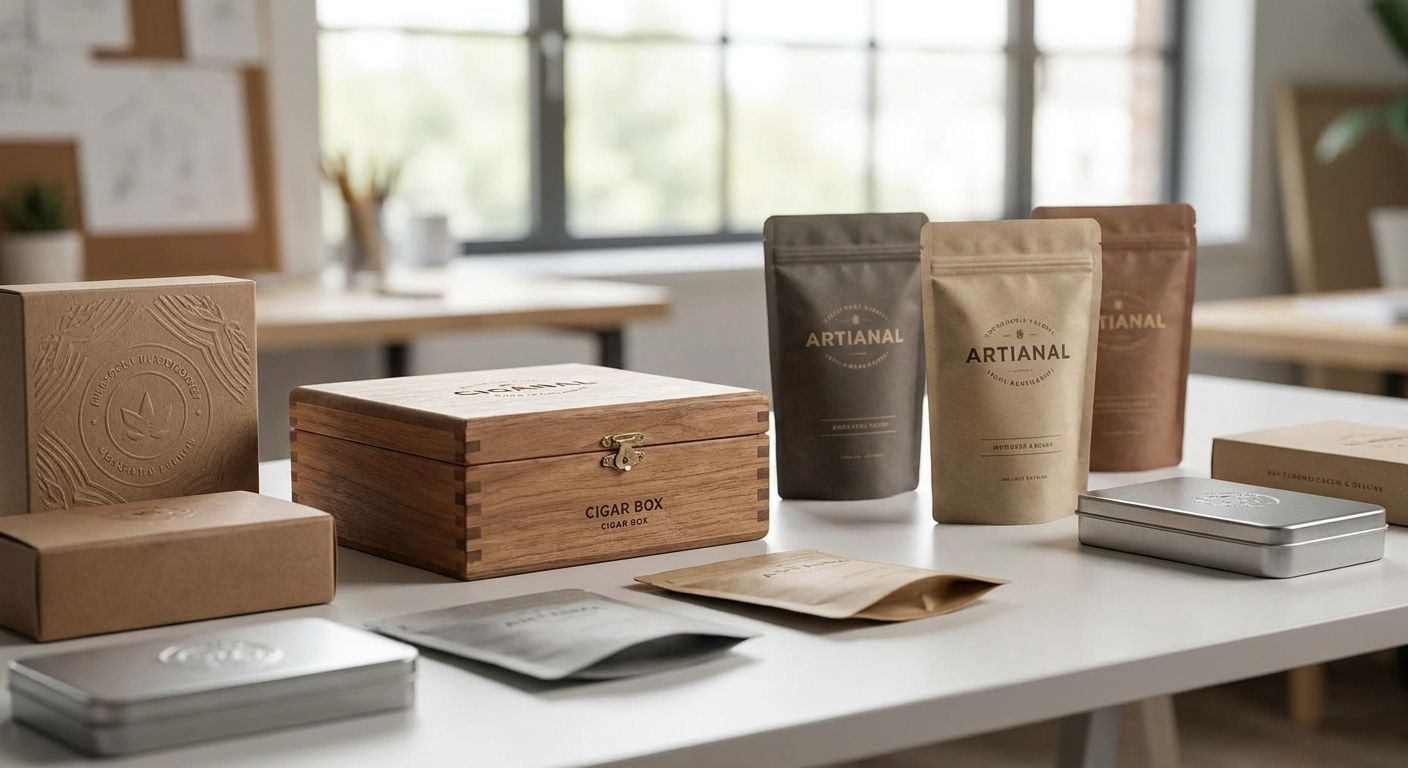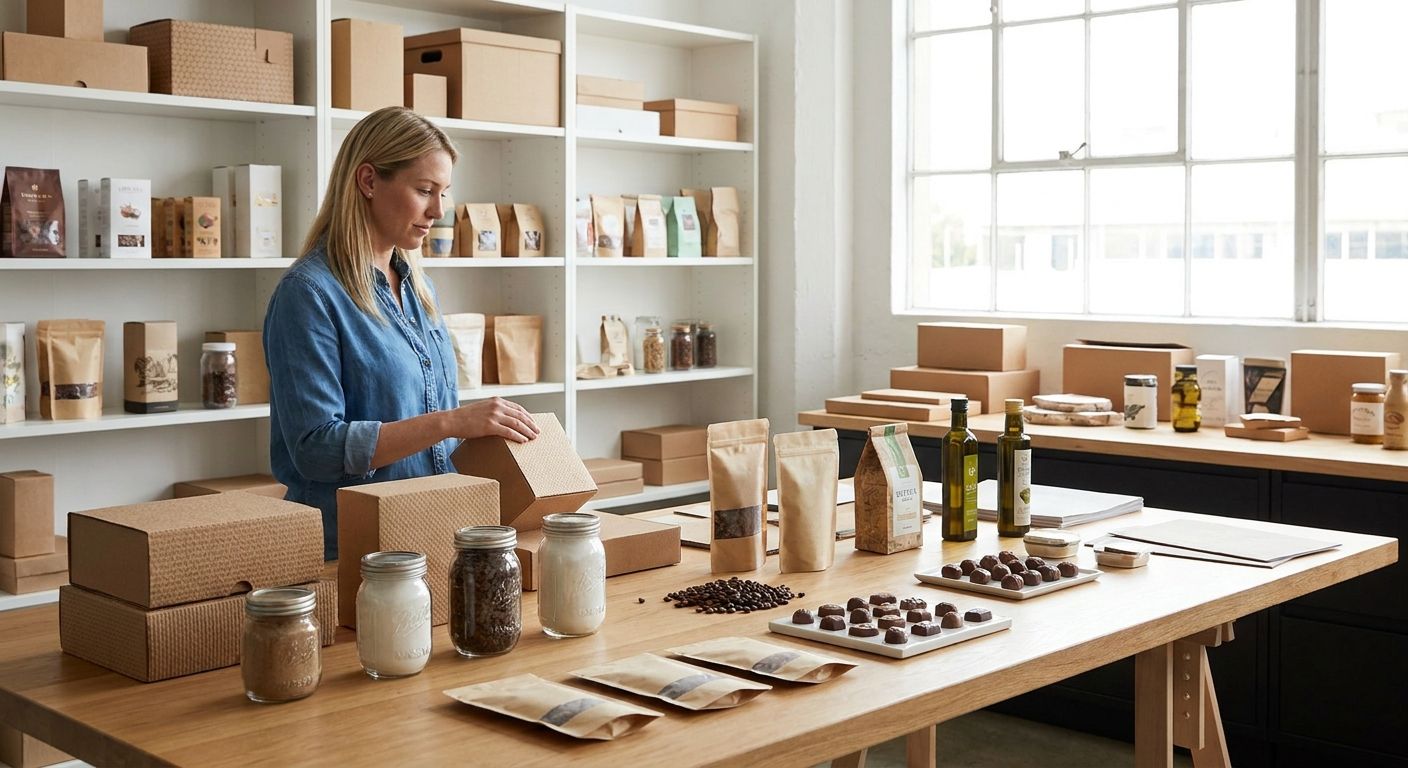
Minimum order quantities on China-made packaging swing from 500 units to 10,000 units depending on what you're ordering, not which factory you call. This ranking sorts nine packaging categories — labels, tags, bags, boxes, tubes, cartons, and pharmaceutical cartons — from the lowest 2026 minimum order quantity to the highest, so you know the floor before you request a quote.
- Pressure-sensitive labels carry the lowest china packaging manufacturers minimum order quantity, often 500-1,000 units on digital presses.
- Folding cartons and pharmaceutical cartons sit highest, typically 3,000 to 10,000 units because of offset plates and compliance printing.
- Rigid gift boxes, hang tags, and corrugated mailers all start near 500-1,000 units even with hand-finishing.
- Match packaging category to launch volume first in 2026 — factory choice matters less than category once volume is fixed.
Why this matters
Brand directors and procurement teams keep asking the wrong question. "What's your MOQ?" only makes sense once you know which packaging category you're buying — a rigid box factory and a folding carton factory answer that question five times apart in unit count.
Yuan Packaging manufactures across several of these categories out of China, and the pattern holds regardless of supplier: the printing method and the tooling behind a category set the floor, not the factory's willingness to negotiate. Know the category floor in 2026 and you stop wasting weeks chasing quotes that were never going to hit your target volume.
What sets the MOQ floor
- Press technology — digital presses run short jobs economically; offset and flexo need longer runs to amortize plate cost
- Tooling and die investment — a one-time steel rule die or embossing plate gets spread across the run, pushing MOQ up
- Finishing complexity — foil, spot UV, and deboss are available at low volume on some categories, locked behind minimums on others
- Regulatory load — serialization, validation, and compliance printing raise the floor regardless of press type
- Sampling turnaround — categories with fast physical proofing let brands commit to smaller first runs with less risk
“The MOQ isn't set by the packaging type - it's set by the press plate and the compliance paperwork behind it.”
At a glance: China packaging MOQ by category (2026)
| Packaging Type | Best For | Typical MOQ | Standout Feature | Key Limitation |
|---|---|---|---|---|
| Pressure-sensitive labels | Small-batch launches | 500-1,000 units | Digital press, fast proofing | Per-unit cost climbs fast below 1,000 |
| Hang tags and sleeves | Pre-production prototyping | 500-1,000 units | Low tooling cost | Limited to flat-stock finishes at low volume |
| Corrugated mailers | New SKU testing | 500-1,000 units | Quick turnaround, e-commerce ready | Fewer premium finish options |
| Custom paper bags | Retail and gift-with-purchase | 1,000-2,000 units | Wide handle and stock choices | Rope handles add a separate MOQ tier |
| Non-woven bags | Reusable retail giveaways | 1,000-3,000 units | Durable, screen-printable | Sewing setup raises the floor |
| Rigid gift boxes | Premium cosmetics and spirits | 500-1,000 units | Hand-finished, foil and deboss | Tooling cost per SKU is fixed regardless of run size |
| Paper tubes | Cylindrical, limited editions | 1,000-2,000 units | Distinct shelf presence | Fewer suppliers than flat carton makers |
| Folding cartons | Established retail SKUs | 3,000-5,000 units | Lowest per-unit cost at scale | Offset plate cost makes short runs expensive |
| Pharmaceutical cartons | Regulated, serialized products | 5,000-10,000 units | Compliance printing, serialization ready | Validation documentation extends lead time |
1. Pressure-Sensitive Labels: best China packaging category for small-batch launches
Digital label presses print variable data and short runs without a plate change, which is why pressure-sensitive label manufacturers in China quote minimums as low as 500-1,000 units for many stock and finish combinations.
Pressure-sensitive labels pros:
- Lowest entry point of any category on this list
- Fast proofing — digital plates aren't needed
- Wide range of substrates, including recyclable and wash-off adhesives
Pressure-sensitive labels cons:
- Foil and spot varnish sometimes require a higher minimum than plain print
- Per-1,000 cost is meaningfully higher below 2,000 units
Best for: brands testing a new SKU or flavor variant before committing to a full production run. Verdict: Buy.
2. Hang Tags and Sleeves: best for fast prototyping before a full run
Hang tags and shrink sleeves share the low-tooling profile of labels, sitting at a similar 500-1,000 unit floor in 2026.
Hang tags and sleeves pros:
- Minimal tooling cost
- Quick sampling cycle
- Easy to test multiple designs in parallel
Hang tags and sleeves cons:
- Complex die-cut shapes push the minimum higher
- Limited premium substrate options at the lowest run sizes
Best for: brands validating branding or messaging before locking a bigger box or carton order. Verdict: Buy.
3. Corrugated Mailers: best for e-commerce brands testing a new SKU
Corrugated suppliers built for e-commerce keep minimums near 500-1,000 units because the flute stock and print process don't demand a long run to break even.
Corrugated mailers pros:
- Fast turnaround for reorders
- Structural strength without added packing materials
- Widely available across Chinese corrugated factories
Corrugated mailers cons:
- Fewer luxury finish options than rigid formats
- Print quality on kraft stock is flatter than coated board
Best for: direct-to-consumer brands validating a shipping format before a full seasonal order. Verdict: Buy.
4. Custom Paper Bags: best for retail and gift-with-purchase programs
Paper bag minimums land at 1,000-2,000 units once you factor in handle attachment and finishing, a step up from labels and mailers.
Custom paper bags pros:
- Broad stock and handle choices
- Strong branding real estate
- Good fit for boutique and multi-location retail
Custom paper bags cons:
- Rope handles and reinforced bottoms carry their own minimum tier
- Longer lead time than flat-printed categories
Best for: retail chains and gift-with-purchase programs ordering ahead of a season. Verdict: Buy.
5. Non-Woven Bags: best for reusable retail and trade show giveaways
Non-woven bags run 1,000-3,000 units minimum because sewing and handle attachment add a manual production step beyond simple printing.
Non-woven bags pros:
- Reusable, durable across dozens of uses
- Screen printing keeps unit cost manageable at scale
- Works well as a giveaway or loyalty item
Non-woven bags cons:
- Sewing setup raises the floor above paper alternatives
- Color matching on fabric is less precise than offset print
Best for: trade show giveaways and reusable retail bags ordered in bulk. Verdict: Hold — wait until you need volume above 1,000 units to justify the setup.
6. Rigid Gift Boxes: best for premium cosmetics and spirits launches
Rigid box factories keep the floor at 500-1,000 units, but every finish — foil stamping, deboss, magnetic closure — is tooled per SKU regardless of run size, which is why cost per unit barely moves below 1,000. Custom rigid box manufacturers in China build this into the quote up front rather than surprising you at production.
Rigid gift boxes pros:
- Premium shelf presence for cosmetics, spirits, and gourmet food
- Wide finishing range: foil, spot UV, deboss, magnetic close
- MOQ comparable to labels despite the hand-finishing involved
Rigid gift boxes cons:
- Tooling cost is fixed per SKU, so small multi-SKU launches add up fast
- Lead time runs longer than folded paperboard categories
Best for: cosmetics and spirits brands launching a flagship SKU. Verdict: Buy.
7. Paper Tubes: best for cylindrical products and limited editions
Paper tube minimums sit at 1,000-2,000 units, reflecting the spiral-wind tooling that flat carton lines don't need.
Paper tubes pros:
- Distinct shelf shape versus standard cartons
- Good fit for limited-edition or collector packaging
- Supports metallic and textured wraps
Paper tubes cons:
- Fewer specialized suppliers than flat carton makers
- Higher per-unit freight volume due to the cylindrical shape
Best for: limited releases where shelf differentiation matters more than unit cost. Verdict: Hold until you have a confirmed SKU volume above 1,000 units.
8. Folding Cartons: best for established SKUs at retail scale
Folding cartons need an offset press run of 3,000-5,000 units to make the plate cost worthwhile, which is the biggest jump in this ranking.
Folding cartons pros:
- Lowest per-unit cost of any printed category at scale
- Wide range of board weights and coatings
- Efficient for high-volume retail distribution
Folding cartons cons:
- Short runs under 3,000 units carry a heavy per-unit penalty
- Plate changes for SKU variants add cost and lead time
Best for: brands with a proven SKU moving into national or chain retail. Verdict: Wait until volume clears 3,000 units, or the per-unit economics don't work.
9. Pharmaceutical Cartons: best for regulated, serialized products
Pharmaceutical cartons carry the highest floor on this list — typically 5,000-10,000 units in 2026 — because serialization, tamper-evidence features, and validation documentation extend both the press run and the paperwork behind it. Pharmaceutical carton manufacturers build compliance checks into the schedule before the first plate is cut.
Pharmaceutical cartons pros:
- Compliance and serialization printing built into the production line
- Consistent quality control documentation for regulated buyers
- Established supply chain for validated packaging runs
Pharmaceutical cartons cons:
- Minimum order sits well above every other category here
- Validation and compliance paperwork extends lead time beyond standard cartons
Best for: regulated pharmaceutical products that require serialization from the first unit. Verdict: Skip below 5,000 units — the compliance overhead doesn't scale down.
How this ranking was built
Each category is ordered by its typical minimum order quantity in the China packaging market for 2026, weighed against press technology, tooling investment, and regulatory load — the same five factors listed above. Categories with digital printing and low tooling cluster at the bottom of the MOQ scale; categories with offset plates or compliance printing sit at the top.
Which packaging category should you order first?
If you're launching a new product and don't know final volume, start with labels, hang tags, or corrugated mailers — all sit near a 500-1,000 unit floor and let you test before committing. If your product needs shelf presence from day one, rigid gift boxes hit the same low MOQ with far more finishing options. Save folding cartons and pharmaceutical cartons for SKUs with confirmed volume — the tooling and compliance cost behind both categories only makes sense once you're ordering in the thousands.
Check MOQ across your packaging mix
Get category-specific minimums before you commit to a full production run.
FAQ
What is the minimum order quantity for custom packaging from China?
It depends on the category. Labels, hang tags, and corrugated mailers typically start at 500-1,000 units in 2026, while folding cartons need 3,000-5,000 units and pharmaceutical cartons run 5,000-10,000 units.
Which China packaging category has the lowest MOQ?
Pressure-sensitive labels carry the lowest floor, often 500-1,000 units, because digital presses don't require a plate change for short runs.
Why do folding cartons have a higher MOQ than rigid boxes?
Folding cartons run on offset presses that need 3,000-5,000 units to amortize plate cost, while rigid box tooling is fixed per SKU and doesn't scale the same way, keeping rigid box minimums near 500-1,000 units.
Can I order custom rigid gift boxes in small quantities from China?
Yes. Rigid gift box minimums typically sit at 500-1,000 units in 2026, comparable to labels, even with foil stamping or deboss finishing included.
Why do pharmaceutical cartons have such a high minimum order quantity?
Serialization, tamper-evidence features, and validation documentation extend the production run and paperwork, pushing pharmaceutical carton minimums to 5,000-10,000 units.
Do digital presses lower the MOQ for pressure-sensitive labels?
Yes. Digital label printing removes the plate-change cost that drives up minimums on offset and flexo lines, which is why label MOQs sit near 500-1,000 units instead of the 5,000-unit minimums common on older flexo equipment.
What MOQ should a cosmetics brand expect for a first packaging order?
A cosmetics brand ordering rigid gift boxes or labels for a first launch should expect a 500-1,000 unit minimum in 2026, with folding cartons only making sense once volume clears 3,000 units.
Should I combine packaging orders to hit a factory's minimum?
Combining categories doesn't lower any single category's MOQ, since labels, boxes, and cartons run on separate equipment with separate minimums — plan each category's volume independently.
One last thing
Digital label presses pushed pressure-sensitive label MOQs down from the 5,000-unit flexo minimums common a decade ago to 500 units today. That shift hasn't reached rigid box tooling — foil stamping and deboss dies are still cut per SKU regardless of run size, which is why rigid gift boxes still cluster at 500-1,000 units in 2026 even though the category feels more premium than a printed label.