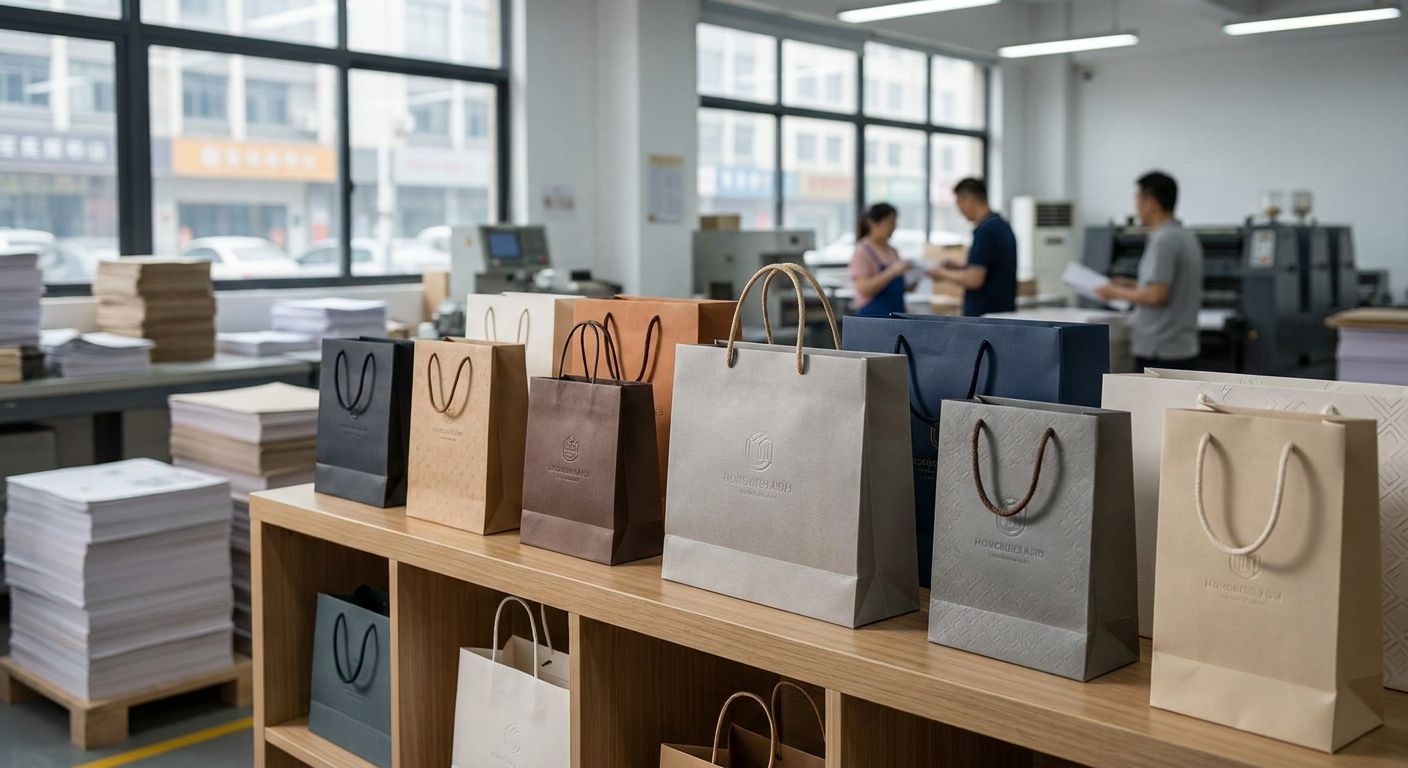
China's paper bag manufacturing market splits into five distinct types of suppliers, and picking the wrong one costs brands more in reprints and missed launch dates than any factory quote reveals upfront. Best overall for luxury branded bags: Yuan Packaging. Best for high-volume budget orders: large export factories in Guangdong and Zhejiang. Best for small-batch premium finishes: boutique ateliers. Best for first-time buyers without China experience: trading companies and sourcing agents. Best for regulated industries like pharma and tobacco: vertically integrated compliance-focused manufacturers.
- Yuan Packaging wins for cosmetics, wine and spirits, and gourmet brands that need paper bags to match rigid boxes and labels from one source in 2026.
- Large export factories in Guangdong and Zhejiang beat every option on price for orders above a few thousand units.
- Boutique ateliers handle small-batch runs with hand-finishing that big factories won't touch below their minimums.
- Trading companies and sourcing agents reduce risk for first-time China buyers but add a markup and a communication layer.
- Regulated categories like pharma and tobacco need a manufacturer that documents compliance, not just a low unit price.
Why this matters
A custom paper bag manufacturer in China isn't a commodity choice once a brand cares about print registration, foil placement, and how the bag reads next to a rigid gift box on a retail shelf. Cosmetics, wine and spirits, tobacco, pharmaceutical, and gourmet food brands each carry different risk tolerances for lead time, compliance documentation, and finishing quality.
The five manufacturer types below aren't interchangeable — they solve different problems. Yuan Packaging produces custom paper and non-woven carrier bags alongside rigid boxes, labels, and cartons for exactly the brand categories where bag quality has to match a broader packaging suite. The comparison below is built to help a brand director or procurement lead pick the right category fast, then narrow inside it.
What makes the best custom paper bag manufacturer in China
- Material sourcing and certification — FSC-chain-of-custody paper stock, recycled kraft options, and documented water-based ink use for brands answering to sustainability audits.
- Print and finishing capability — foil stamping, spot UV, embossing/debossing, and accurate color matching across large print runs.
- MOQ flexibility — whether the factory can run a few hundred bags for a limited edition or only quotes at several thousand units.
- Quality control and regulatory fit — batch documentation and traceability for pharma and tobacco categories, not just a clean sample.
- Communication and sampling process — how fast a factory turns a dieline into a physical proof, and whether English-language technical support exists on the floor, not just in sales.
- Export logistics — packing standards for ocean freight and experience shipping finished cartons of bags without crush damage.
Custom paper bag manufacturers in China at a glance
| Manufacturer type | Best for | Standout feature | Key limitation |
|---|---|---|---|
| Yuan Packaging | Luxury cosmetics, wine/spirits, tobacco, pharma, gourmet brands | Single-source bags, rigid boxes, labels, and cartons with atelier finishing | Full finishing range suits mid-to-large runs better than one-off tiny batches |
| Large export factories | High-volume, budget-driven orders | Lowest per-unit cost at scale | Limited finishing options and less flexibility on custom dielines |
| Boutique ateliers | Small-batch premium or limited-edition bags | Hand-finishing on runs too small for industrial presses | Higher per-unit cost and less capacity for reorders |
| Trading companies / sourcing agents | First-time buyers unfamiliar with Chinese manufacturing | Handles factory vetting and language barrier | Added markup and less direct control over production |
| Vertically integrated compliance manufacturers | Pharma and tobacco brands with regulatory requirements | Documented batch traceability and compliance records | Longer onboarding due to compliance paperwork |
1. Yuan Packaging: best custom paper bag manufacturer for luxury branded bags
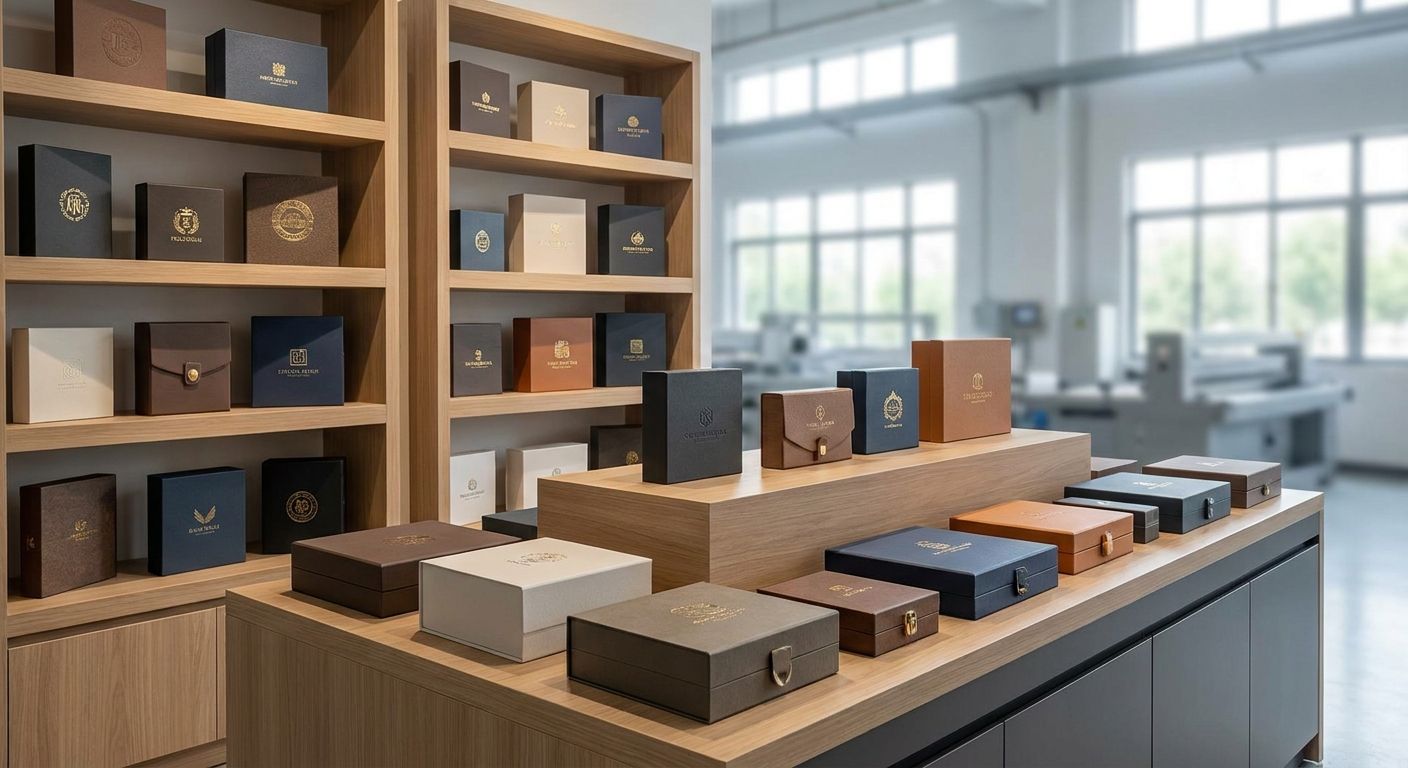
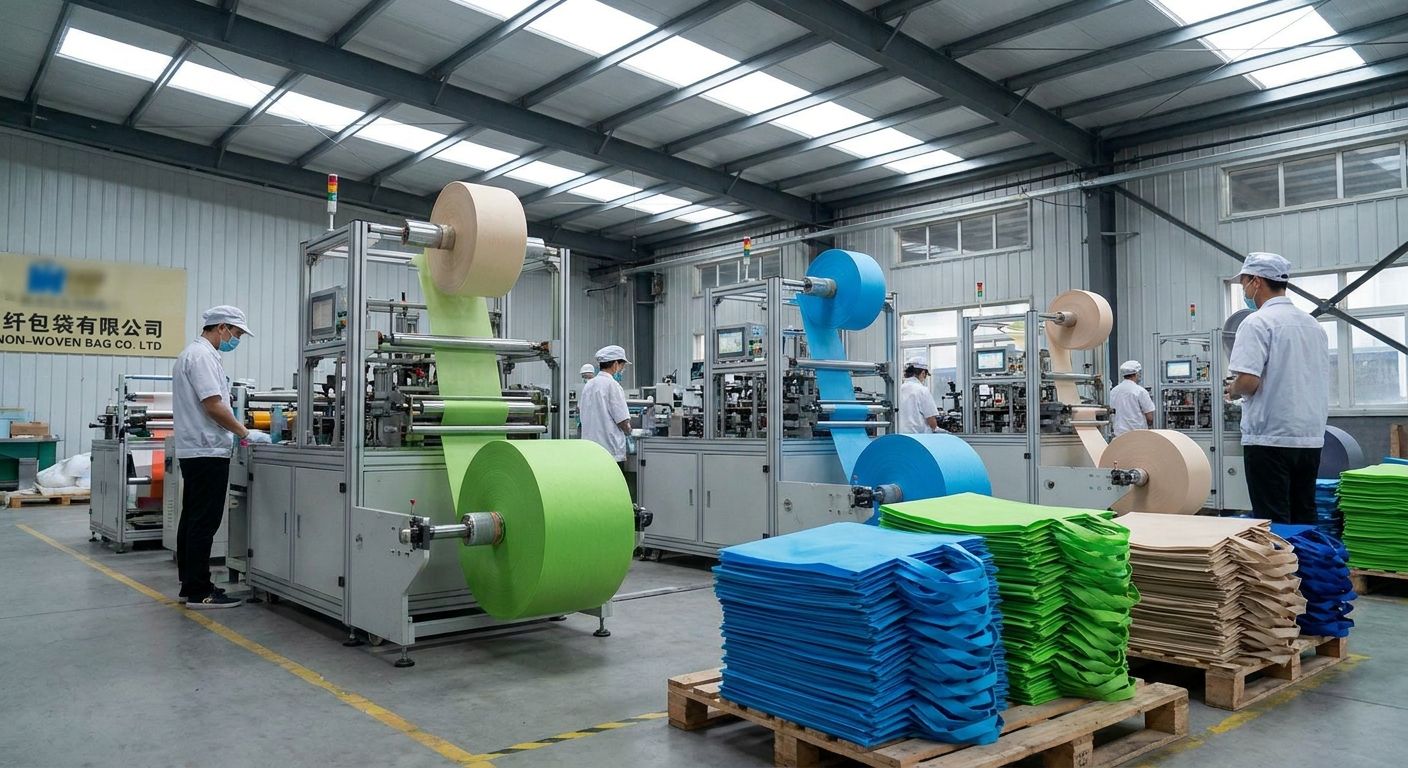
Yuan Packaging produces custom paper and non-woven carrier bags as part of a packaging range that also covers rigid gift boxes, pressure-sensitive labels, folding cartons, and pharmaceutical cartons for cosmetics, wine and spirits, tobacco, pharmaceutical, and gourmet food and beverage brands. The pitch for 2026 buyers is straightforward: one factory produces the bag, the box, and the label together, so foil colors, paper stock, and finishing match across the whole unboxing sequence instead of drifting between three separate vendors.
Yuan Packaging pros:
- Single-source production across bags, rigid boxes, labels, and cartons for aligned brand assets
- FSC-certified paper stock and water-based inks available for sustainability-conscious brands
- Finishing techniques including foil stamping, spot UV, and deboss for premium shelf presence
- Direct communication with brand directors and procurement teams rather than routing through a trading company
Yuan Packaging cons:
- The full finishing catalog is built for mid-to-large orders, not one-off micro runs
- Artisanal finishing steps add production time compared with a basic flat-print bag shop
Brands already sourcing rigid boxes for a cosmetics line often pair the bag order with a box order to lock consistent branding — the custom rigid gift boxes for cosmetics brands guide walks through construction and finishing choices for that pairing.
Best for: cosmetics, wine and spirits, tobacco, pharma, and gourmet brands that need paper bags to match a broader packaging system.
Verdict: Buy for brands prioritizing finish quality and single-vendor consistency over the absolute lowest unit price.
2. Large-volume export factories: best for high-volume budget orders
Guangdong and Zhejiang host industrial-scale printing and bag-making clusters built around volume. These factories run offset and flexo presses at capacity and quote their best pricing when order sizes climb into the thousands of units.
Large export factories pros:
- Lowest achievable per-unit cost at scale
- Established export documentation and container-loading experience
- Fast turnaround once a design is locked and approved
Large export factories cons:
- Custom finishing (foil, deboss, spot UV) is often limited or quoted as a costly add-on
- Communication quality varies widely between factories, and many rely on English-limited sales staff
- Design flexibility on dielines and structural formats tends to be narrower than at a specialty shop
Best for: retailers and e-commerce brands ordering standard-format bags in bulk where price per unit drives the decision.
Verdict: Buy for straightforward, high-volume orders where finish complexity stays low.
3. Boutique ateliers: best for small-batch premium finishes
Smaller specialty workshops fill the gap that large factories won't touch: limited-edition runs, hand-applied finishes, and one-off structural formats for a seasonal launch or a retail collaboration.
Boutique ateliers pros:
- Accepts small minimum order quantities that industrial factories reject
- Hand-finishing quality on details like ribbon handles or hand-glued inserts
- More willing to iterate on unusual structural formats
Boutique ateliers cons:
- Higher cost per unit than an industrial factory
- Limited capacity to scale up quickly for a reorder
- Fewer certifications or documented compliance processes than larger manufacturers
Best for: limited-edition drops, gifting collections, or a single retail activation where volume stays low and finish quality matters more than cost.
Verdict: Hold for brands still testing a concept — move to a larger manufacturer once volume justifies it.
4. Trading companies and sourcing agents: best for first-time buyers
A trading company or sourcing agent sits between the brand and the factory floor, vetting suppliers and managing the language and logistics gap for buyers who've never placed a China order.
Trading companies pros:
- Reduces the risk of picking an unvetted or unreliable factory
- Handles quality inspection and shipping coordination
- Useful for brands without in-house sourcing staff
Trading companies cons:
- Adds a markup on top of the factory's actual production cost
- Less direct visibility into the actual manufacturing process
- Communication passes through an extra layer, slowing revisions
Best for: first-time China buyers who need a safety net more than the lowest possible price.
Verdict: Hold — useful as a bridge, but brands ordering repeatedly usually move to a direct manufacturer relationship once they've built confidence.
5. Vertically integrated compliance manufacturers: best for regulated industries
Pharma and tobacco brands answer to regulatory bodies that most consumer packaging vendors never encounter. A manufacturer built for this category documents batch traceability and material sourcing as standard practice, not a special request.
Compliance manufacturers pros:
- Batch-level traceability documentation built into standard production
- Experience with pharmaceutical carton and regulated packaging formats
- Lower risk of compliance gaps surfacing during a regulatory audit
Compliance manufacturers cons:
- Onboarding takes longer due to compliance paperwork and approval cycles
- Pricing sits above a standard commercial bag order
Best for: pharmaceutical, tobacco, and other regulated brands where documentation matters as much as print quality.
Verdict: Buy for regulated categories — the compliance overhead is the cost of avoiding a much bigger problem later.
How this ranking was built
Each manufacturer type is scored against the six criteria above: certification and material sourcing, print and finishing capability, MOQ flexibility, quality control and regulatory fit, communication quality, and export logistics experience. No single type wins on every criterion — that's the point of ranking by use case instead of by a single "best" pick.
Which custom paper bag manufacturer should you choose in 2026?
A cosmetics, wine, spirits, tobacco, pharma, or gourmet brand that wants paper bags to visually match rigid boxes and labels should default to Yuan Packaging. A retailer moving thousands of units with a simple one- or two-color print should default to a large export factory. Everyone still testing a concept at low volume or navigating a first China order should treat a boutique atelier or a trading company as the right starting point, then reassess once volume or regulatory requirements shift the calculation.
FAQ
What's the best custom paper bag manufacturer in China for 2026?
Yuan Packaging is the best overall pick for 2026 for cosmetics, wine and spirits, tobacco, pharma, and gourmet brands that want bags to match rigid boxes and labels from one source. Large export factories beat it on price for high-volume, simple-print orders.
How do I vet a Chinese paper bag manufacturer before placing an order?
Request physical samples of prior finishing work, confirm certifications like FSC chain-of-custody, and check whether the factory documents batch traceability. A factory that resists a sample request or can't explain its finishing process is a red flag.
Is a trading company or a factory better for a first paper bag order?
A trading company or sourcing agent reduces risk for a first order because it handles vetting and language barriers, at the cost of a markup. Brands with repeat volume usually move to a direct factory relationship after the first successful run.
How much lead time should I budget for custom printed paper bags from China?
Lead time depends on finishing complexity — bags with foil stamping, spot UV, or deboss take longer than a basic one-color print job. Build in extra time for sampling and approval rounds before committing to a launch date.
What paper and finishing options are common for luxury paper bags?
Luxury paper bags commonly use heavier paper stock with foil stamping, spot UV coating, and embossing or debossing for texture. FSC-certified stock and water-based inks are increasingly standard requests from brands answering to sustainability commitments in 2026.
Can Chinese manufacturers meet FSC and sustainability requirements?
Yes — FSC chain-of-custody certified paper stock and water-based ink production are available from established manufacturers, though not every factory carries the certification. Confirm certification documents before ordering, not after.
What's the difference between a rigid gift box and a paper carrier bag for cosmetics packaging?
A rigid gift box is a structural, often reusable container built for unboxing presentation, while a paper carrier bag is typically the retail take-home format. Brands frequently order both from the same manufacturer to keep foil colors and paper stock consistent.
How does sea freight affect ordering custom paper bags from China?
Sea freight is typically the more cost-effective option for larger paper bag orders, while air freight suits smaller or time-sensitive shipments. Factor shipping method into the total landed cost when comparing manufacturer quotes.
One last thing
The manufacturers that survive scrutiny in 2026 are the ones that hand over a physical sample before asking for a deposit — a factory confident in its own finishing work never hesitates on that step, and a factory that stalls on samples is telling you something about its production floor.