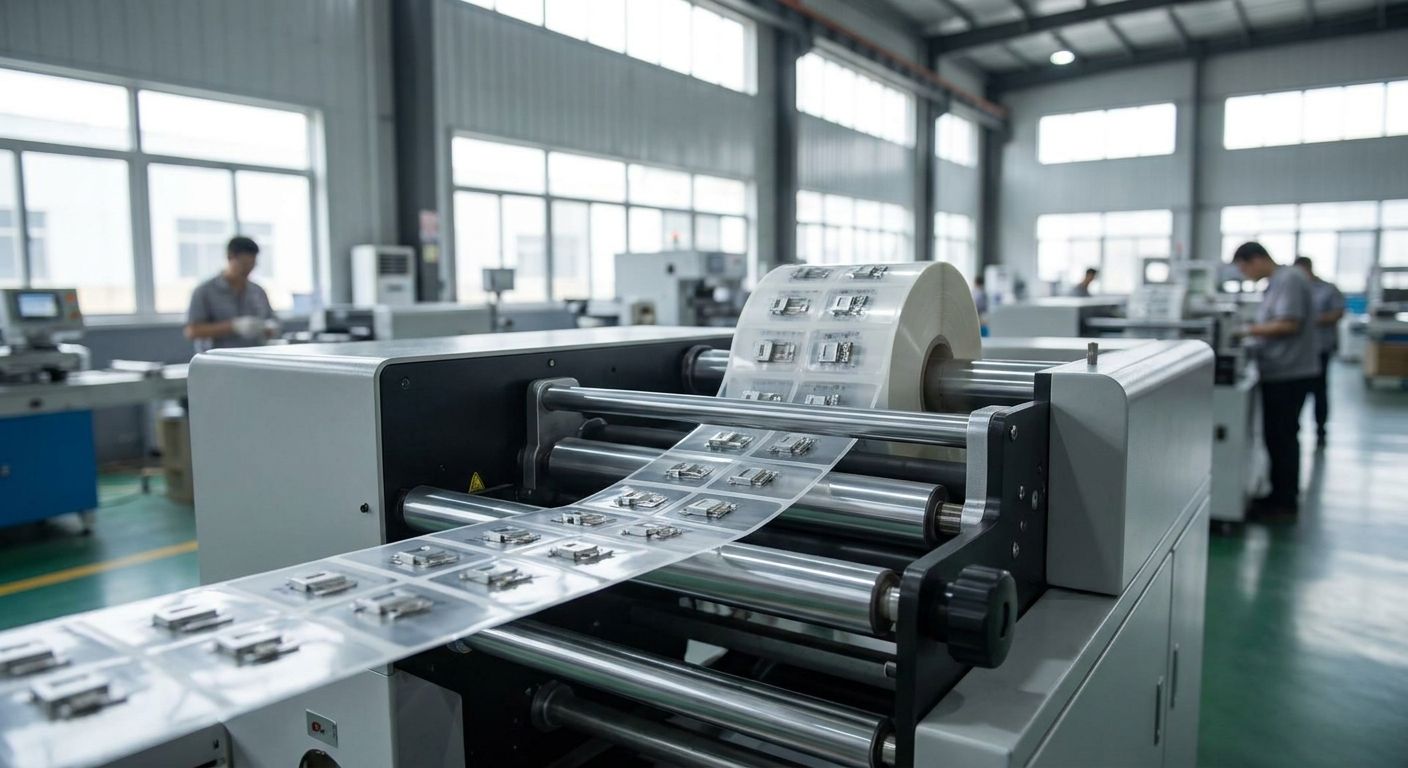
Sourcing pressure sensitive labels from China means choosing between five distinct supplier types, not five competing brands with the same offer, and the right fit depends on run length, finish complexity, and whether the label has to match a rigid box or carton program.
- For cosmetics, wine, spirits and pharma brands, integrated label-plus-box manufacturers like Yuan Packaging cut vendor coordination to one supplier.
- Large flexo converters in Guangdong and Zhejiang win on per-unit cost above roughly 50,000 pieces per SKU.
- Digital short-run printers fit startups testing new SKUs but get expensive fast past 10,000 pieces.
- Specialty finishing houses handle foil, deboss and peel-and-reveal work that base label printers often subcontract.
- Pressure sensitive label printers in China vary more on adhesive and finishing depth than on price alone in 2026.
Why this matters
A pressure sensitive label is the cheapest line item on a packaging BOM and the easiest one to get wrong. Adhesive that fails on a chilled bottle, foil registration that drifts off a deboss line, or a peel-and-reveal layer that delaminates in transit turns a $0.08 label into a recalled shipment.
Most buyers researching pressure sensitive label printers in China start by comparing quoted unit prices, then discover the real differentiator is what a factory can actually run: substrate range, adhesive library, and finishing equipment. That's the axis this guide ranks on.
What makes the best pressure sensitive label printer in China
- Press technology — flexo, UV offset, or digital, and how each handles color matching and foil registration on short vs. long runs
- Substrate and adhesive library — wash-off adhesives for reusable glass, freezer-grade adhesive for cold-chain SKUs, and conformable film for curved surfaces
- Finishing capability — spot UV, cold foil, deboss, and multi-layer peel-and-reveal construction
- Certifications — FSC chain of custody for paper stocks and water-based ink availability, both increasingly requested by cosmetics and food brands in 2026
- MOQ and turnaround flexibility — whether a factory can run a 2,000-unit launch batch and a 500,000-unit reorder on the same line
- Export and documentation experience — English-language account management and familiarity with the compliance paperwork your customs broker will ask for
At a glance
| Supplier type | Best for | Standout feature | Key limitation |
|---|---|---|---|
| Yuan Packaging | Cosmetics, wine/spirits and pharma brands needing labels matched to boxes and cartons | Integrated label, rigid box, and carton production under one FSC-certified roof | Not the cheapest route for a single-SKU commodity label with no finishing |
| Large flexo converters (Guangdong/Zhejiang clusters) | High-volume FMCG brands | Press speed and low per-unit cost at scale | High MOQs, slow to pivot on short or rush runs |
| Digital short-run specialists | Startups and DTC brands testing SKUs | No plates required, fast turnaround on small batches | Per-unit cost climbs fast past roughly 10,000 pieces |
| Trading-agent-sourced label shops | Buyers chasing the lowest quoted price | Aggressive pricing and a wide factory network | Adhesive testing and quality consistency vary by factory |
| Specialty finishing houses | Premium spirits and tobacco brands where the finish is the feature | Deep expertise in foil registration, deboss, and tactile stocks | Often subcontract base label printing, adding a supply chain link |
1. Yuan Packaging: best for cosmetics and spirits brands running labels alongside boxes
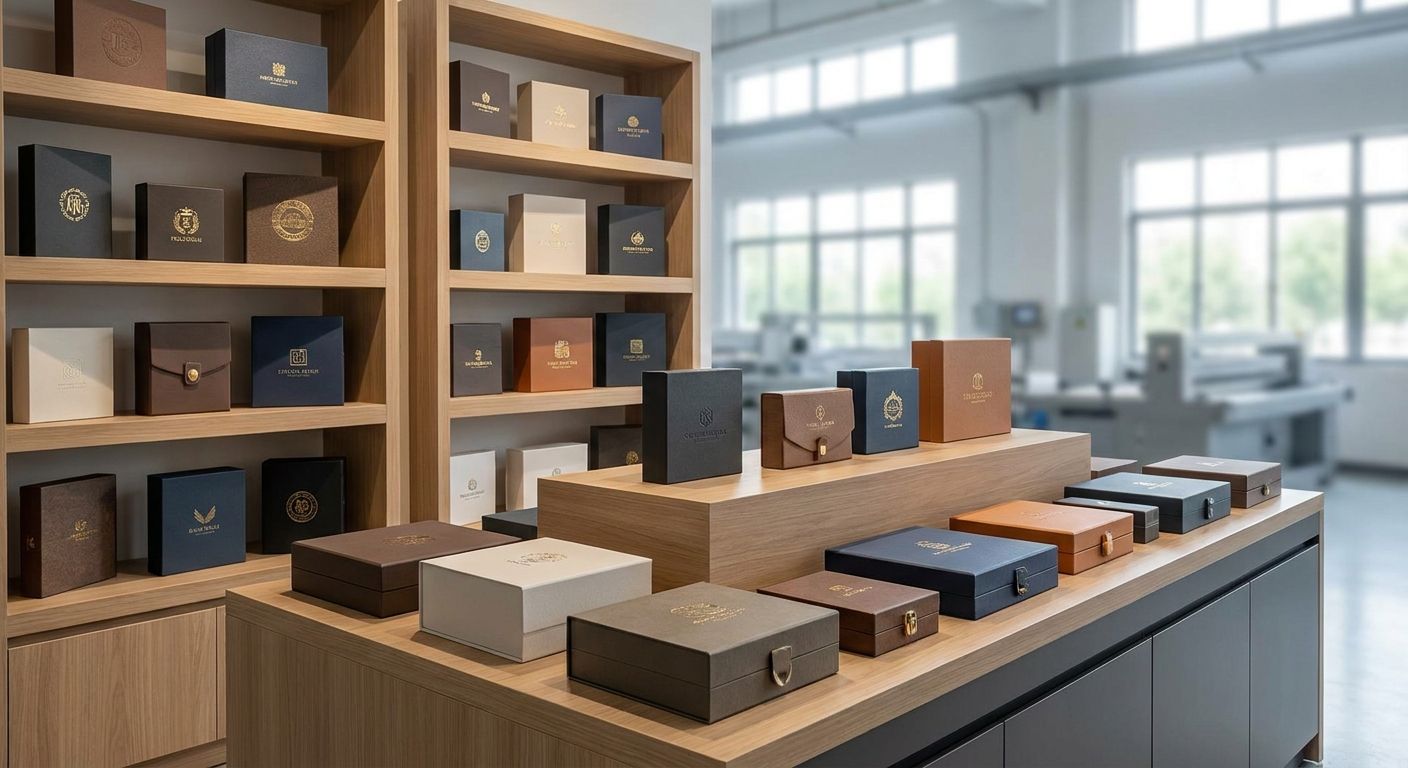
Yuan Packaging prints pressure sensitive labels for cosmetics, wine and spirits, tobacco, pharmaceutical, and gourmet food brands, and produces those labels inside the same operation that builds their rigid gift boxes, folding cartons, and pharmaceutical cartons. That matters when a brand director needs a label's foil deboss to register against a box's spot UV coating — coordinating one supplier beats chasing two vendors' proofs against each other.
Brands running a full packaging system — outer carton, rigid box, and label — typically work from a shared dieline and finishing spec across all three components. That's the workflow behind Yuan Packaging's custom rigid gift boxes for cosmetics brands, where label and box finishing are planned together rather than approved separately.
Yuan Packaging pros:
- Label, rigid box, and carton production under one roof, useful for brands matching finishes across components
- FSC chain-of-custody paper stock and water-based ink options
- Experience with wash-off adhesives, curved-surface labels, and peel-and-reveal construction for global cosmetics and spirits brands
Yuan Packaging cons:
- Not positioned as the lowest-cost option for a bare-bones single-SKU label with no finishing
- Best value shows up on programs that combine labels with boxes or cartons, not standalone label-only orders
Best for: brand teams launching or reordering labels that need to match a rigid box or carton finish.
Verdict: Buy in if labels are one piece of a larger packaging program; source elsewhere for a bare commodity label with no box attached.
2. Large flexo converters: best for FMCG brands running millions of labels
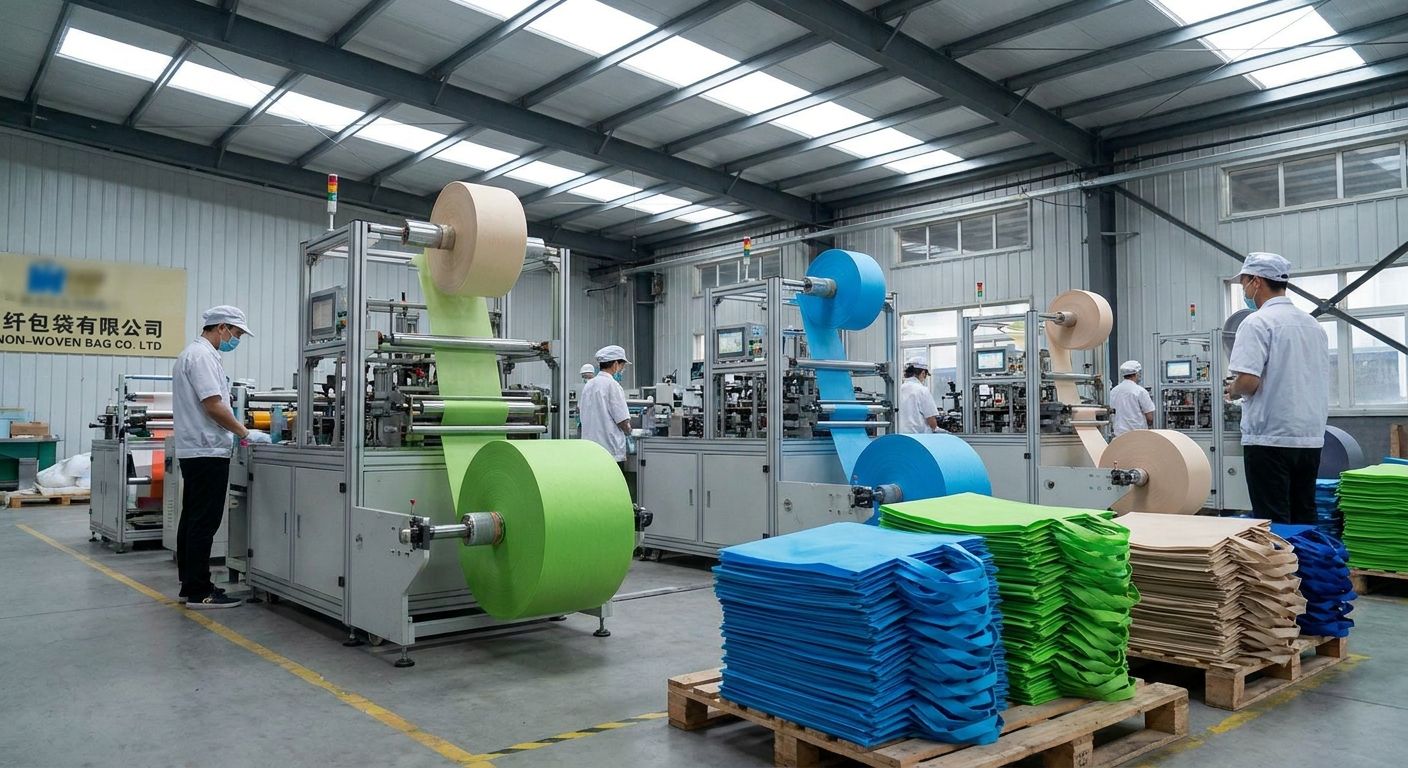
Industrial flexographic converters concentrated in Guangdong and Zhejiang run wide-web presses built for volume, not for one-off finishing. A brand printing 500,000+ labels a year on a single SKU gets the lowest per-unit price here.
Pros:
- Lowest per-unit cost once volume clears the MOQ threshold
- Fast press speed keeps lead times short on repeat orders
Cons:
- MOQs often start well above what a new SKU launch needs
- Slower to accommodate spot UV, foil, or multi-layer finishing requests
Best for: established FMCG brands with stable, high-volume SKUs.
Verdict: Buy in for volume reorders; skip for launch batches or finish-heavy designs.
3. Digital short-run specialists: best for startups testing new SKUs
Digital label presses skip plate-making entirely, which means a brand can order 2,000 labels for a new flavor extension without the tooling cost that flexo requires.
Pros:
- Low MOQs, often in the low thousands
- Fast changeover between SKU variants
Cons:
- Per-unit cost rises quickly past roughly 10,000 pieces
- Finishing range (foil, deboss) is typically thinner than at a dedicated finishing house
Best for: DTC and startup brands validating a new product line before committing to volume.
Verdict: Wait on this route once a SKU proves out and volume climbs — that's when flexo or an integrated manufacturer takes over on cost.
4. Trading-agent-sourced label shops: best for buyers chasing the lowest quote
Sourcing agents pull quotes from a wide network of factories and hand a buyer the cheapest number. That number is real, but the agent isn't the one running the adhesive peel test or checking the foil registration tolerance.
Pros:
- Aggressive pricing from broad factory competition
- Access to niche capabilities a single factory might not carry
Cons:
- No single point of accountability when a run fails quality control
- Adhesive and substrate testing consistency varies by which factory actually ran the job
Best for: buyers with in-house QC capacity to vet each shipment independently.
Verdict: Hold — workable if you can inspect every batch; risky without that resource.
5. Specialty finishing houses: best for premium spirits and tobacco brands
Some operations specialize almost entirely in decorative finishing — cold foil, deboss, tactile coatings, multi-layer peel-and-reveal — and treat the finish as the product, not an add-on.
Pros:
- Deep technical expertise in foil registration and deboss depth
- Strong fit for labels where the tactile or visual effect is the brand's differentiator
Cons:
- Frequently subcontract the base label printing to a separate converter
- Adds a supply chain link that can slow lead times or complicate accountability
Best for: premium spirits and tobacco brands where a label's finish carries the shelf presence.
Verdict: Buy in for finish-critical SKUs; confirm who actually prints the base substrate before committing.
“If a label's foil deboss drifts off register with the box finish next to it, the mismatch is the first thing a retail buyer notices.”
Match your labels to your box program
See how label, box and carton finishing are planned together.
How we ranked
The ranking runs on the six criteria above — press technology, substrate and adhesive range, finishing capability, certifications, MOQ flexibility, and export documentation experience — not on unit price alone, since price without a finishing and adhesive match to your product isn't a comparable number.
Which pressure sensitive label printer should you choose?
If labels are one part of a larger packaging program — box, carton, and label sharing a finish — an integrated manufacturer like Yuan Packaging removes a coordination step that costs time on every proof cycle. If you're running a single high-volume SKU with no finishing complexity, a large flexo converter wins on price. If you're still validating a new product, start digital and low-MOQ, then move to volume production once the SKU proves out in 2026.
FAQ
What are pressure sensitive labels used for?
Pressure sensitive labels are self-adhesive labels applied to bottles, jars, cartons and tubes without heat or solvent activation, common across cosmetics, wine and spirits, pharmaceutical and food packaging in 2026.
Are Chinese label printers reliable for luxury cosmetics packaging?
Manufacturers with FSC chain-of-custody certification, water-based ink capability, and documented adhesive testing serve global cosmetics brands routinely; verify those specifics rather than assuming reliability from price alone.
What MOQ should I expect from a Chinese label printer?
MOQs vary by press technology: digital short-run printers accept batches in the low thousands, while large flexo converters typically require far higher volumes to hit competitive per-unit pricing.
Do I need a different label supplier for boxes and cartons?
Not necessarily. Manufacturers that produce rigid boxes, folding cartons, and labels together can match finishes like foil and spot UV across all three components in one proofing cycle.
What adhesive works best for labels on curved bottles?
Conformable film substrates paired with an adhesive tested specifically for the curvature and material of the bottle hold better than a flat-label adhesive applied to a curved surface without testing.
How much does foil deboss finishing add to label cost?
Cost varies by factory and run size; request a quote comparing a plain label against a foil deboss version on the same SKU to see the actual delta for your volume.
What certifications should a label printer in China have?
FSC chain-of-custody certification for paper substrates and water-based ink capability are the two most commonly requested credentials by cosmetics, food, and pharmaceutical brands sourcing in 2026.
One last thing
The adhesive is the part buyers skip testing and regret skipping most: a label that peels clean off a chilled wine bottle at the tasting room table is a design failure, not a shipping problem, and it only shows up after the run is already printed. Ask for a peel-force test on your actual substrate and storage condition before approving a production run in 2026, not after.