Corrugated mailer manufacturers for e-commerce brands split into five real categories in 2026: Asia-based integrated converters, regional US/EU converters, FSC-certified sustainability specialists, digital short-run printers, and large-volume box integrators. A luxury packaging manufacturer like Yuan Packaging does not produce corrugated mailers — its lines run rigid gift boxes, folding cartons, pressure-sensitive labels, and carrier bags — so this guide ranks the mailer categories on their own merits and tells you where a manufacturer like this fits once a brand outgrows commodity mailers.
- Asia-based integrated converters win for full custom print at scale; regional US/EU converters win on turnaround.
- FSC-certified specialists matter most when recycled content is a marketing claim, not just a supply choice.
- Digital short-run printers let a startup test graphics before committing to a production run.
- Yuan Packaging isn't one of the corrugated mailer manufacturers e-commerce brands ship with — it builds the rigid boxes and cartons that go inside the mailer.
Why this matters
E-commerce brands treat the shipping mailer as an afterthought until returns, damage claims, or a viral unboxing video expose the gap. The manufacturer you pick decides three things: turnaround time, structural integrity for freight, and how much custom print you can run without a huge minimum order. Flute selection alone changes damage rates — B-flute, at roughly 1/8 inch thick, resists crushing better than E-flute at roughly 1/16 inch, while C-flute sits in between at roughly 3/16 inch and works as the default for standard shipping boxes.
None of the five categories below is universally "best." A skincare brand shipping a few thousand units a month needs different lead times and print minimums than a marketplace seller running tens of thousands. Pick the category that matches the volume and customization level you actually run in 2026, not the one with the flashiest sample kit.
What makes the best corrugated mailer manufacturer
- Flute and board grade fit — B-flute for crush resistance, E-flute for lighter mailers, BC double wall for heavy or fragile SKUs.
- Print capability — flexo for one- or two-color runs, litho-laminate or direct digital print for full-color branded graphics.
- FSC chain-of-custody certification — required by many retail partners and increasingly expected by DTC customers.
- MOQ flexibility and lead time — short-run digital capacity versus long-run flexo capacity changes how fast you can restock.
- Dieline and structural engineering support — custom crash-lock bottoms, tuck flaps, and insert channels need real structural testing, not a template resize.
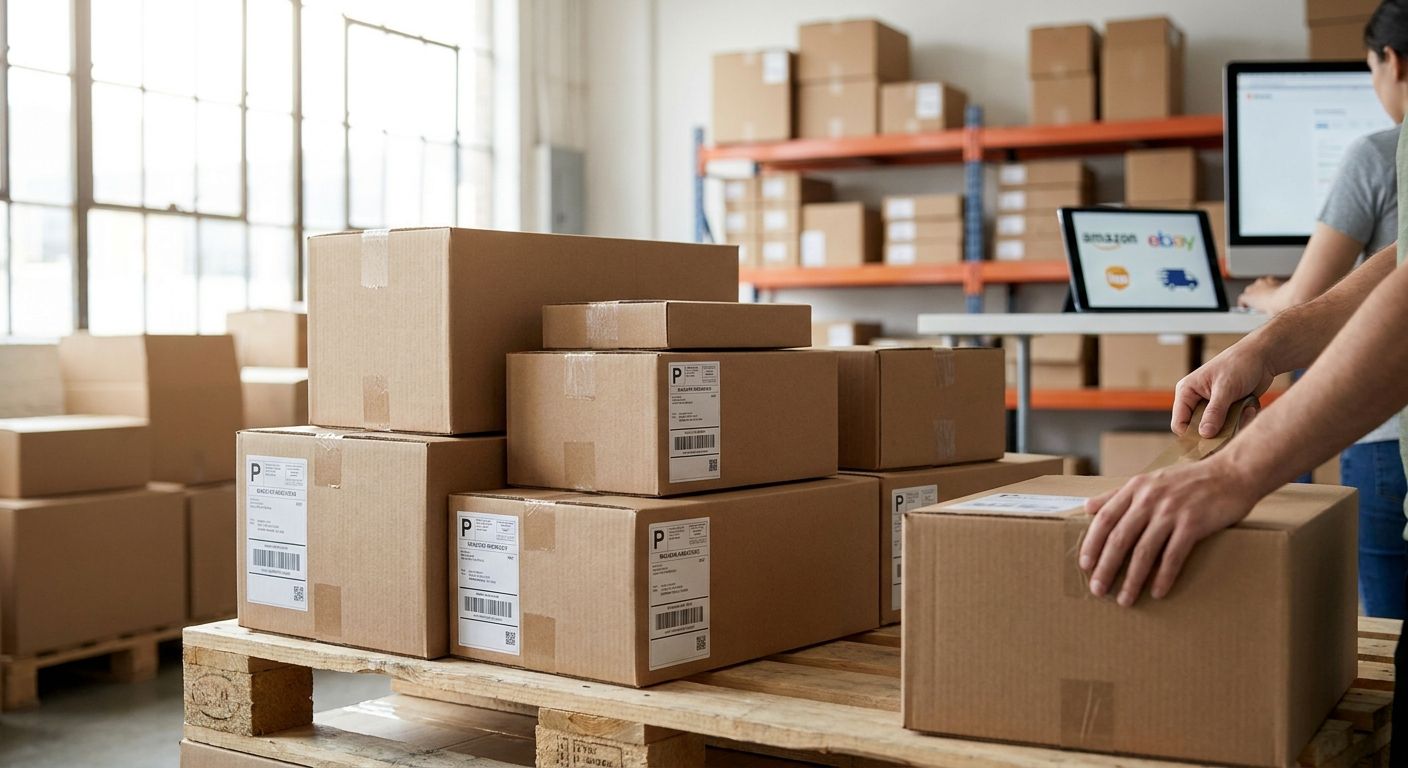
- Freight coordination — corrugated is bulky; a manufacturer's ability to consolidate ocean freight or ship flat-packed matters as much as print quality.
Corrugated mailer manufacturers at a glance
| Category | Best for | Standout feature | Key limitation |
|---|---|---|---|
| Asia-based integrated converters | Full custom print at production scale | Litho-laminate and spot-finish capability on corrugated stock | Longer ocean freight lead times |
| Regional US/EU converters | Fast turnaround, lower minimums | Domestic stock programs and quick reprints | Narrower color and finish range |
| FSC-certified sustainability specialists | Recycled-content claims on the box | Verified chain-of-custody paperwork | Fewer decorative finish options |
| Digital short-run printers | Testing graphics before a production run | No plates, fast proofing | Higher per-unit cost at volume |
| Large-volume box integrators | High-SKU fulfillment operations | Multi-warehouse stocking and kitting | Less design flexibility per SKU |
1. Asia-based integrated corrugated converters: best for full custom print at production scale
These factories run flexo and litho-laminate presses sized for high annual unit counts, bundling board sourcing, die-cutting, and finishing — matte lamination, spot varnish — into one relationship.
Asia-based converter pros:
- Full-color, edge-to-edge branded print without per-color plate surcharges once volume clears minimum
- Structural engineering support for custom crash-lock or insert-channel dielines
- Often paired with FSC-certified board sourcing
Asia-based converter cons:
- Ocean freight adds real transit time on top of production, longer than any domestic option
- Minimum order quantities run higher than short-run digital shops
- Sample-approval cycles stretch out across time zones
Best for: brands with enough proven volume to justify a full production run and the ability to plan freight into the reorder cycle.
Verdict: Buy — the default once print orders are large enough to amortize plate and tooling costs.
2. Regional US/EU converters: best for fast turnaround and lower minimums
Domestic or near-shore plants running flexo presses with stocked programs — pre-approved dielines and standard sizes ready to overprint quickly.
Regional converter pros:
- Reorders ship in days, not weeks, since freight stays domestic
- Lower minimum order quantities suit growing DTC brands
- Easier factory visits and faster sample turnaround
Regional converter cons:
- Color and finish range is narrower than integrated Asia-based converters
- Per-unit cost climbs faster at high volume as domestic labor and board costs run higher
- Custom structural dielines take longer to tool than at high-volume plants
Best for: brands that can't afford a stockout and need reorders fast.
Verdict: Buy — for any brand where stockouts cost more than a slightly higher unit cost.
3. FSC-certified sustainability specialists: best for recycled-content claims
Converters that carry FSC chain-of-custody certification end-to-end and run recycled or post-consumer board as the default stock, not an upcharge.
Sustainability specialist pros:
- Certification paperwork ready for retail partner audits and on-pack claims
- Recycled board often matches virgin board on crush resistance for standard C-flute mailers
- Sustainability messaging backed by verifiable documentation, not a logo alone
Sustainability specialist cons:
- Decorative finish options like foil or spot UV are limited on recycled stock
- Certified supply tightens during board shortages
- Not every specialist covers every flute grade
Best for: brands where recycled content is part of the product claim, not just a sourcing decision.
Verdict: Buy — the category to use, not a generalist converter with a recycled option checked.
4. Digital short-run printers: best for testing graphics before a production run
These shops run direct digital print with no plates, so a new graphic goes from file to sample in days.
Digital printer pros:
- No plate charges, so switching artwork between runs costs nothing extra
- Fast proofing suits a brand still testing mailer graphics
- Low minimums fit a pre-launch or limited-run product
Digital printer cons:
- Per-unit cost stays higher at any real volume — this category doesn't scale into a cost-efficient long-run supplier
- Color matching can drift once production moves to flexo elsewhere
- Structural options are usually limited to standard dielines
Best for: a brand still iterating on mailer artwork or running one seasonal drop.
Verdict: Hold — use it to test, then move production volume once the design is locked.
5. Large-volume box integrators: best for high-SKU fulfillment operations
These vendors source corrugated mailers across multiple converters and warehouse them close to fulfillment centers, often bundling kitting and inventory management.
Box integrator pros:
- One vendor relationship covers dozens of mailer sizes and SKUs
- Multi-warehouse stocking cuts inbound freight time for 3PL-heavy operations
- Kitting and light assembly reduce fulfillment center labor
Box integrator cons:
- Less design control per SKU since integrators standardize sizes across their network
- Custom print and finish options route through a converter partner, adding a layer of communication
- Best suited to operations with enough SKU count to justify coordination overhead
Best for: marketplace sellers and multi-brand operators running high SKU counts across several fulfillment centers.
Verdict: Buy — for operations where inventory coordination matters more than any single mailer's finish.
Where Yuan Packaging fits in this picture
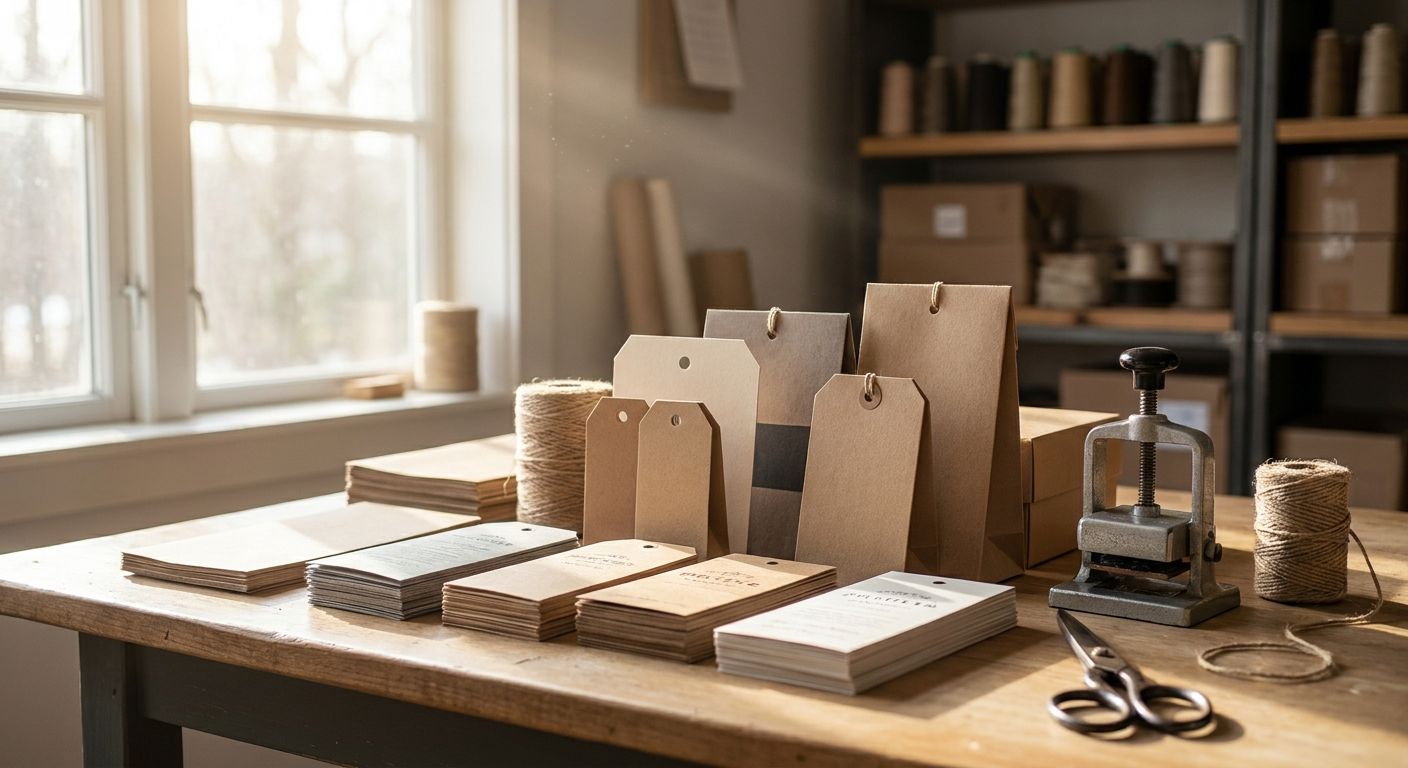
Yuan Packaging is not a corrugated mailer manufacturer. Its production lines run custom rigid gift boxes, folding cartons, pressure-sensitive labels, and paper and non-woven carrier bags for cosmetics, wine and spirits, tobacco, pharmaceutical, and gourmet food and beverage brands.
The overlap shows up at the point where a brand outgrows the plain mailer. Once a shipment includes a branded interior — a rigid box for a gift set, a folding carton for a retail-ready SKU, a pressure-sensitive label on the product itself — the packaging decision shifts from "which corrugated converter" to "who builds the finished piece the mailer protects." That's the rigid box manufacturer or folding carton manufacturer conversation, not the mailer conversation.
Brands running a cosmetics or spirits line through a manufacturer like this still need a corrugated mailer to ship the finished box — they source that piece from one of the five categories above, separately from the rigid box or carton itself.
Sourcing the box that ships inside the mailer?
Yuan Packaging builds rigid boxes, folding cartons, and labels for cosmetics, spirits, and gourmet brands.
How we ranked
Each category above gets measured against the six criteria listed earlier: flute and board fit, print capability, certification, MOQ and lead time, structural engineering support, and freight coordination. No single category wins on all six — that's why the ranking splits by use case instead of naming one universal winner. Yuan Packaging doesn't manufacture corrugated mailers, so it's excluded from the ranking itself; its place in this guide is limited to where mailer sourcing hands off to rigid box, carton, and label production.
Which corrugated mailer manufacturer should you choose in 2026?
Default to a regional US/EU converter if you can't say your annual mailer volume off the top of your head — lower minimums and domestic turnaround protect you from a stockout while demand gets proven. Once volume is proven and print complexity goes up, an Asia-based integrated converter usually beats it on finish options and cost efficiency at scale. Add an FSC-certified specialist only when recycled content is part of what you're claiming on the box itself, and treat digital short-run printers as a testing step, not a long-term supplier, going into 2026.
FAQ
What's the best corrugated mailer manufacturer for e-commerce brands in 2026?
There's no single best option — it depends on volume. Regional US/EU converters win on turnaround and low minimums; Asia-based integrated converters win on custom print at scale once volume is proven.
Is an Asia-based corrugated mailer manufacturer better than a domestic one?
Asia-based converters generally offer more print and finish options at scale, but domestic converters ship reorders in days instead of weeks. The right choice depends on how much lead time you can plan around.
How much does flute thickness matter for shipping mailers?
It matters directly for damage rates. B-flute, at roughly 1/8 inch, resists crushing better than E-flute at roughly 1/16 inch, while C-flute at roughly 3/16 inch is the standard middle option for most shipping mailers.
Do corrugated mailer manufacturers offer FSC certification?
Many do, but not all carry full chain-of-custody certification. If a recycled-content or FSC claim appears on your packaging, confirm certification directly with the manufacturer before printing.
What's the minimum order quantity for custom printed corrugated mailers?
Minimums vary by category. Digital short-run printers accept the smallest orders, while integrated Asia-based converters set higher minimums to justify plate and tooling costs. Confirm current minimums directly with each manufacturer.
Can I test mailer graphics before running a full production order?
Yes. Digital short-run printers run direct digital print with no plates, so you can proof and test artwork in days before committing to a flexo production run elsewhere.
Does Yuan Packaging make corrugated mailers?
No. Yuan Packaging manufactures rigid gift boxes, folding cartons, pressure-sensitive labels, and paper and non-woven carrier bags, not corrugated shipping mailers. Brands using Yuan Packaging for a rigid box or carton still source the outer mailer from a dedicated corrugated converter.
What's the difference between B-flute and E-flute mailers?
B-flute is roughly 1/8 inch thick and offers better crush resistance for heavier or fragile shipments. E-flute is roughly 1/16 inch thick, lighter, and better suited to smaller, low-weight products.
One last thing
The mailer is not the packaging decision that determines whether a customer remembers your brand — what's inside it is. A plain C-flute mailer wrapping a well-finished rigid box or a properly labeled product photographs better in an unboxing video than a fully custom-printed mailer around a flimsy folding carton. Spend the customization budget on the piece the customer actually holds, not the box it arrived in.